Two custom bags can carry the same logo, the same dimensions, and the same price on a quote, and still behave nothing alike in a customer’s hand. The reason is the resin underneath the print. Almost every flexible plastic bag is made from polyethylene, but the polyethylene comes in three common grades, and which one you choose decides whether the bag feels crisp and crinkly or soft and glossy, whether it can be run thin without tearing, and how well it takes an ink. This is a materials deep-dive into LDPE, HDPE, and LLDPE, so you can specify the feel you want instead of accepting whatever the factory runs by default.
One family, three personalities
All three resins are polyethylene, built from the same ethylene building block. What separates them is how the molecular chains are branched and packed, and that packing is measured as density. The tighter the chains pack, the higher the density, and the higher the density, the stiffer and hazier the film. Low-density polyethylene sits at the soft, clear end. High-density polyethylene sits at the stiff, hazy end. Linear low-density polyethylene lands near LDPE on the scale but is engineered for toughness. The density differences look tiny on paper, a few hundredths of a gram per cubic centimeter, but they translate into very different bags.
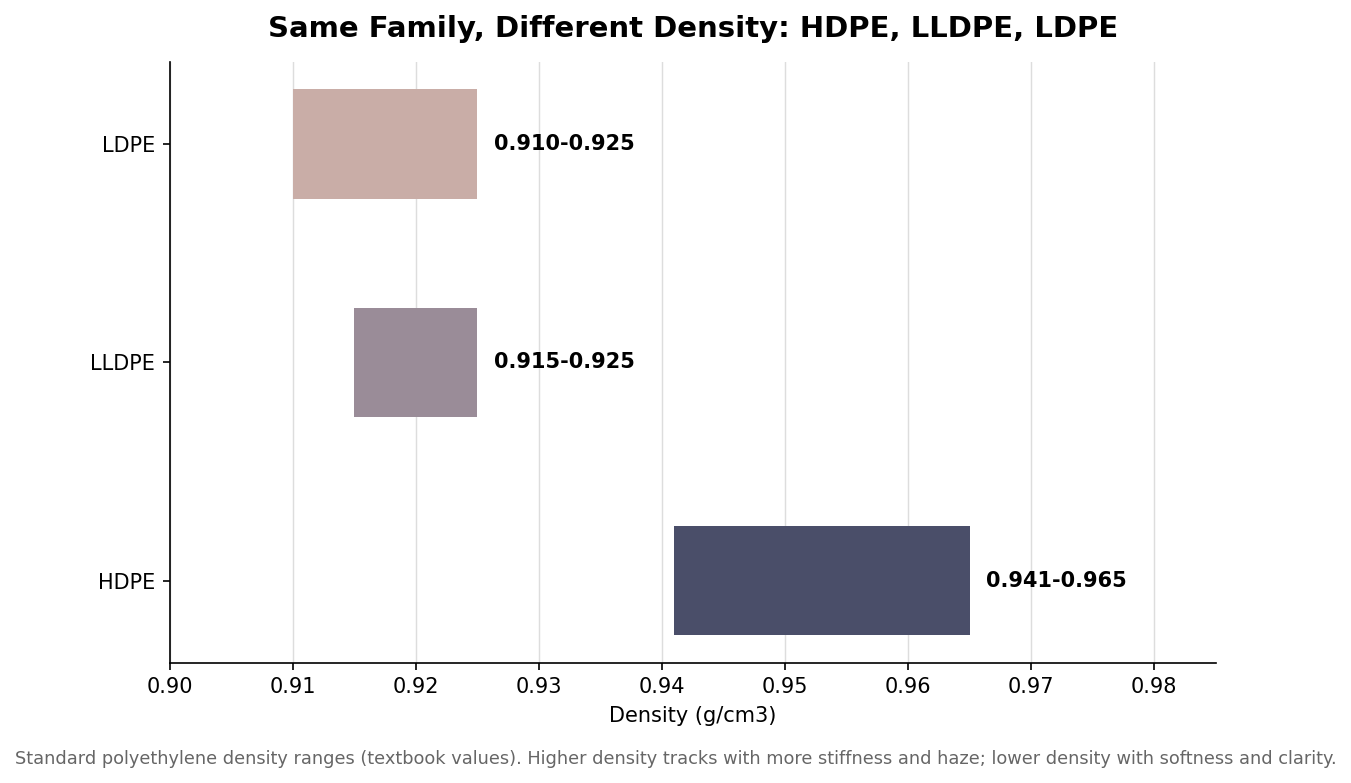
Keep that spectrum in mind as we go, because nearly every practical difference in feel, strength, and print traces straight back to it. You are not really choosing between three unrelated plastics; you are choosing where on the density line you want your bag to sit.
HDPE: stiff, hazy, and thin on purpose
High-density polyethylene is the crinkly, slightly cloudy film you know from grocery vest bags and produce rolls. Its tightly packed chains give it high tensile strength and rigidity for its weight, which is exactly why it can be run remarkably thin, often well under a mil, and still hold a load. That thinness is a feature, not a corner cut: HDPE’s strength-to-weight ratio lets a bag use less material while carrying groceries or produce reliably. The trade-offs are cosmetic and tactile. HDPE has a matte, hazy look rather than a glassy one, it makes that distinctive rustling sound, and it is stiffer in the hand. For high-volume, function-first bags where cost per bag and load strength matter more than a premium feel, HDPE is usually the right and most economical call.
LDPE: soft, glossy, and print-friendly
Low-density polyethylene is the opposite personality. Its branched chains pack loosely, so the film is soft, flexible, and has the best optical clarity and gloss of the three. That glossy, substantial hand is why LDPE dominates retail and merchandise bags, boutique carriers, and thicker poly mailers, where the bag is part of the brand experience and a customer judges quality by touch. The clarity and smooth surface also make LDPE friendly to printing, holding crisp, saturated artwork well. The cost of that softness is strength: LDPE has lower tensile strength than HDPE, so it is typically run thicker, commonly in the one-and-a-half to three mil range for retail bags, to deliver the heft and durability the look implies. You pay in material for the premium feel, which is a fair trade when presentation is the point.
LLDPE: the toughness in the blend
Linear low-density polyethylene is the specialist. Its short, uniform branches slide against each other under stress instead of snapping, which gives it the best puncture and tear resistance of the three. In practice, pure LLDPE bags are less common than LLDPE used as a blend component: mixing it into LDPE or HDPE film adds toughness and lets a converter downgauge, running a thinner film that still resists tearing. That is why LLDPE shows up in freezer bags, heavy-duty liners, produce bags, and protective covers, anywhere a bag has to survive sharp contents or rough handling. If your product has corners, edges, or weight that punishes a bag, asking whether an LLDPE blend is available is often the difference between a bag that holds and one that splits at the seam.
What the resin means for thickness and cost
Resin and thickness are two separate specifications, and they interact. Because HDPE and LLDPE are strong for their gauge, they let you hit a strength target at a lower mil, which lowers material cost. LDPE, being softer, generally needs more thickness to feel and perform the same way, which raises material cost but buys clarity and a premium hand. This is why comparing two quotes on price per bag alone can mislead: a thin HDPE bag and a thick LDPE bag are solving different problems, and the cheaper number is not automatically the better value.
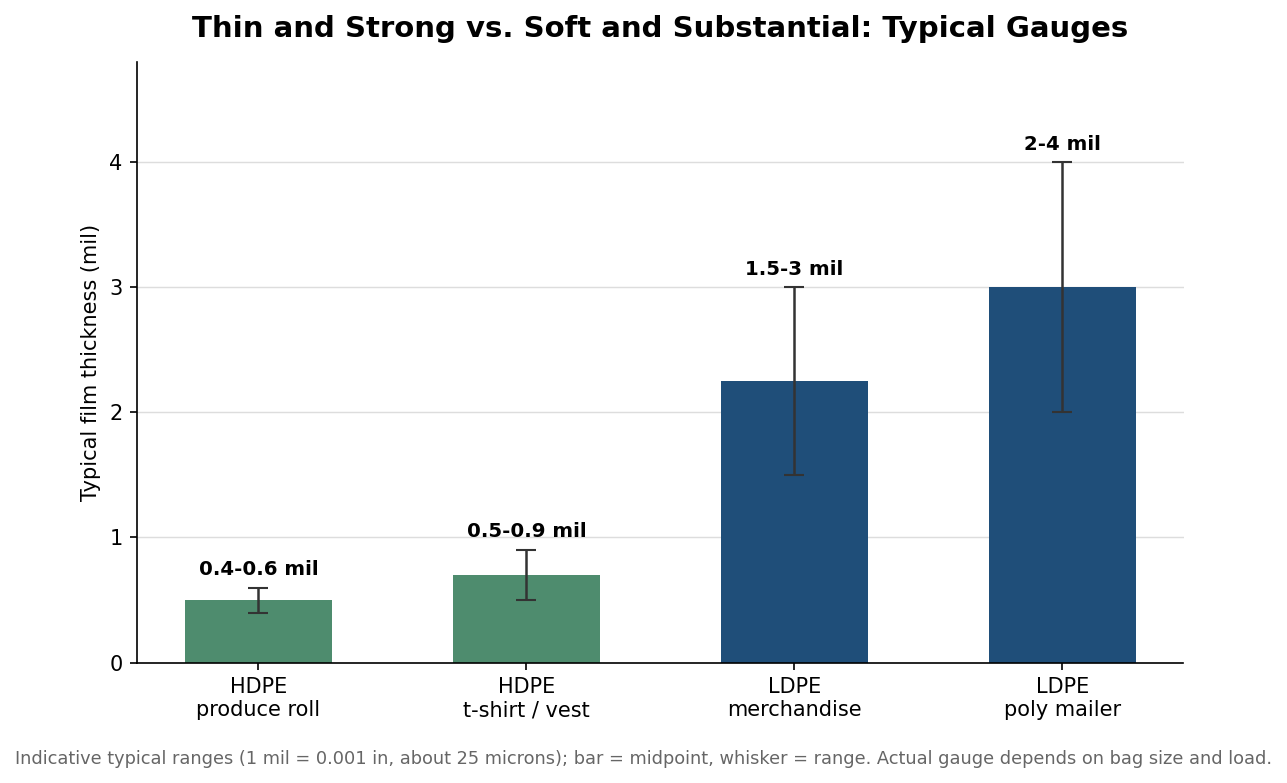
The gauges above are indicative typical ranges, not fixed rules; the correct thickness always depends on bag size, load weight, and how the bag is handled, a decision we walk through in our guide on what gauge you actually need. Treat resin as the first decision and gauge as the second, and confirm both on the order rather than leaving either to a house default.
Choosing the resin for your bag
Work backward from the job the bag has to do. If the bag is part of the unboxing or checkout experience and needs to look and feel premium, specify LDPE and accept a thicker gauge for clarity and gloss. If the bag is a high-volume workhorse where cost per unit and load strength lead, HDPE gives you strength thin and cheap, with a hazier, crinklier finish customers rarely mind on a functional bag. If the contents are sharp, heavy, or likely to stress the film, ask for an LLDPE blend to buy puncture and tear resistance, often while shaving thickness. One caution on print: a hazy HDPE surface can mute artwork, so if a bold logo on that stock matters, discuss opaque or white underprints with your supplier, and see our piece on printing a logo on plastic bags without overpaying for how to keep that affordable.
None of these resins is best in the abstract; each wins a specific job. Name the resin you want on the order, state the gauge separately, and ask your supplier to confirm both. Do that and the bag in the customer’s hand feels the way you intended, rather than the way the cheapest available film happened to feel.